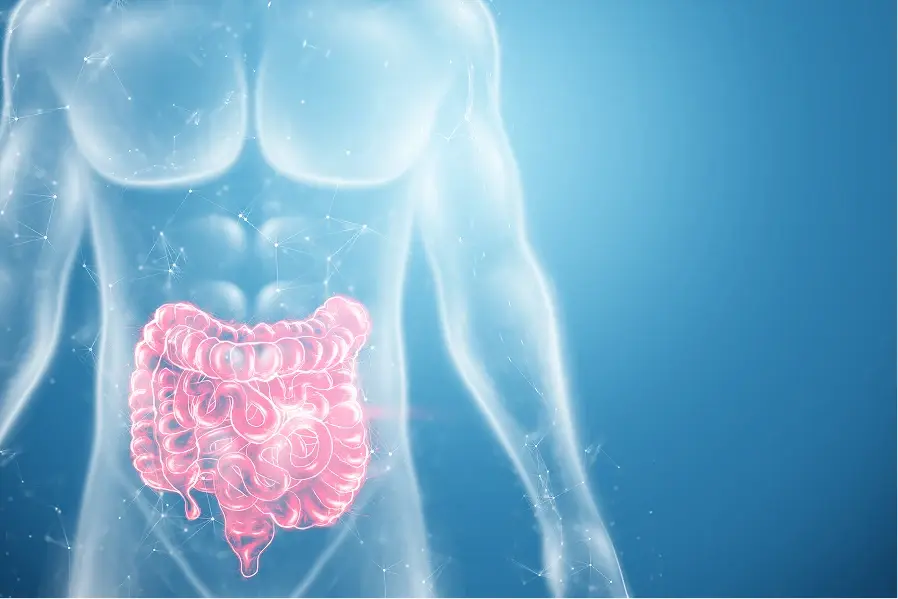
For more than two decades, Metabolic Solutions has developed innovative stable-isotope breath tests that make complex metabolic processes measurable without invasive procedures.
Our team has created a family of Gastro Breath Tests that use stable-isotope–labeled substrates to evaluate organ function and nutrient metabolism through a simple breath collection.
These proprietary tests apply the same scientific rigor that underpins our isotope tracer research—turning exhaled air into reliable metabolic information for academic, pharmaceutical, and clinical investigators.
Breath as a Biochemical Signal: How Gastro Breath Tests Work
Each Gastro Breath Test uses a safe, non-radioactive carbon-13 (¹³C)–labeled compound.
After the subject ingests the labeled substrate, normal metabolism converts it to carbon dioxide (CO₂). The ¹³C-enriched CO₂ appears in exhaled air and is measured by stable-isotope mass spectrometry.
The amount of labeled CO₂ recovered in breath reflects the activity of the specific metabolic pathway being studied. Because sampling is as simple as collecting timed breath specimens, the tests are fast, reproducible, and well suited for both research and clinical environments.
Over the last 20 years, our scientists have developed multiple breath tests using this approach, including assays for hepatic function, small-intestinal bacterial overgrowth, gastric emptying, vitamin B₁₂ status, and pancreatic performance. These assays are used by biopharmaceutical and academic researchers to study drug effects on organ metabolism, nutritional status, and gastrointestinal function.
Below are two of our newest proprietary innovations: a Vitamin B₁₂ Breath Test (BBT) and a Pancreatic Breath Test (PBT).
Vitamin B₁₂ Breath Test (BBT): Measuring Nutrient Metabolism in Real Time
Vitamin B₁₂ deficiency is a widespread problem, especially among older adults. Existing diagnostic methods can be expensive, lack specificity, or yield inconclusive results.
To provide a simpler and more accurate functional assessment, Metabolic Solutions developed the Vitamin B₁₂ Breath Test (BBT).
The Science Behind the Test
The BBT follows the metabolism of propionate to carbon dioxide (CO₂)—a pathway that requires vitamin B₁₂ as a cofactor.
After ingestion of a small dose of ¹³C-sodium propionate, the compound is metabolized to methylmalonyl-CoA, then catalyzed by vitamin B₁₂ to succinyl-CoA, and ultimately converted to ¹³CO₂ through the tricarboxylic-acid (TCA) cycle.
The amount of ¹³CO₂ appearing in breath indicates propionate-metabolizing activity and, therefore, an individual’s vitamin B₁₂ status.
Published Validation and Results
Results from our collaborative study, “A New ¹³C Breath Test to Detect Vitamin B₁₂ Deficiency” (Journal of Breath Research, 2011), demonstrated that the BBT accurately distinguished deficient from normal subjects using a brief breath-collection schedule (baseline, 10 min, 20 min).
The study confirmed reproducibility, simplified dosing requirements, and strong agreement with recognized biochemical markers such as methylmalonic acid.
The BBT provides clinicians and researchers with a low-cost, accurate, and easy-to-interpret diagnostic tool for evaluating vitamin B₁₂ function.
Pancreatic Breath Test (PBT): Quantifying Exocrine Function with Ease
Chronic pancreatitis (CP) is difficult to diagnose in its early stages.
Imaging often fails to detect functional changes, and the most sensitive direct test—the secretin stimulation test—is complex and available only in limited centers.
Recognizing the need for a simpler functional assay, Metabolic Solutions developed the Pancreatic Breath Test (PBT).
The Principle Behind the PBT
The PBT is modeled after the secretin stimulation test but uses a novel isotope-dilution technique.
The test detects bicarbonate released from the pancreas by measuring the dilution of a 50 mg oral ¹³C-bicarbonate dose administered after a 250-calorie liquid meal. Only four breath samples are required, and the entire procedure is completed within one hour, making it suitable for use in a primary-care office.
Clinical Findings
Subjects with abnormal pancreatic function show little dilution of breath ¹³CO₂ levels, indicating reduced bicarbonate secretion.
Our phase 1 results, presented at Digestive Disease Week 2012 (San Diego), demonstrated that the PBT can detect both mild and severe pancreatitis within this simplified one-hour protocol.
Why Gastro Breath Tests Are Changing Clinical Research
Traditional metabolic tests often require blood samples or invasive procedures that can limit patient participation and increase cost.
Gastro Breath Tests provide a noninvasive, isotope-based alternative that delivers direct, functional metabolic information from a few timed breath collections. They are simple, rapid, reproducible, and already used in both research and clinical settings.
|
Feature
|
Gastro Breath Tests
|
Traditional Diagnostics
|
|
Procedure
|
Simple breath collections
|
Blood or other invasive sampling
|
|
Safety
|
Uses stable, non-radioactive isotopes
|
Depends on clinical procedure
|
|
Duration
|
Typically ≤ 1 hour
|
Often longer, varies by method
|
|
Setting
|
Primary-care or research site
|
Hospital or specialty lab
|
|
Endpoint
|
Functional metabolism (¹³CO₂ measurement)
|
Indirect biochemical markers
|
|
Patient Comfort
|
High
|
Moderate
|
|
Reproducibility
|
Demonstrated and published
|
Varies by test type
|
Metabolic Solutions: Leaders in Stable-Isotope Breath Testing
The development of these proprietary Gastro Breath Tests builds on more than 30 years of expertise in stable-isotope tracer science.
From study design to breath-sample analysis, our scientists provide the precision and reproducibility that researchers and clinicians expect from a regulatory-ready laboratory.
Our Vitamin B₁₂ and Pancreatic Breath Tests exemplify how stable-isotope methodology can transform complex metabolic measurements into straightforward, patient-friendly diagnostics.
To learn more about our proprietary Gastro Breath Tests or to discuss how they can support your metabolic research or clinical studies, contact our team.