




Stable Isotope Research Applications

Breath Test Endpoints,
Powered by Stable
Isotopes Science

Get high-confidence endpoints for liver, gastric, pancreatic, and GI studies. Our validated stable isotopes assays measure 13C-substrate conversion to 13CO2 and bacterial metabolism to hydrogen and methane with regulator-trusted precision. 

box-test
box

Tailored tracer kits designed for your study

medal

35+ years measuring metabolism with precision

FLASK
GLP-compliant, CLIA-certified, 21 CFR Part 11 validated
message-lines

Consultative approach, with over 1,000+ studies guided from design to submission

Comprehensive Workflows for Reproducible Results

box

End-to-end custom kit manufacturing

print
Audit trails + submission-ready, customizable reporting
clipboard

Isotope assays, peer-reviewed methods

Reveal Mechanistic Insights with
Validated Liver Function Endpoints

Metabolic Solutions offers validated breath tests that quantify liver function non-invasively, using safe 13C-labeled tracers to measure mitochondrial function, cytochrome P450 activity, and cytosolic capacity.

Our validated breath tests use a safe biologic substrate labeled with a non-radioactive isotope of carbon, and determine the rate of appearance of labeled carbon dioxide to estimate enzyme activity, organ function, or the presence of disease. 

Mitochondrial Function Cytochrome P450 Activity Cytosolic Capacity
  • Methionine Breath Test

    A rapid, non-invasive test that quantifies liver mitochondrial function. 13C-methionine is metabolized exclusively in hepatic mitochondria, and 13CO₂ in breath correlates wdith disease severity. 

    Methionine is an essential amino acid that has important roles in various metabolic processes, including protein synthesis.

    The Methionine Breath Test uses 1-13C-methionine, which is a non-radioactive isotope and is metabolized exclusively by hepatic mitochondria. 13C-methionine metabolism within 20 minutes results in an increased concentration of 13CO2 in expired breath.

    The quantity of 13CO2 measured in breath correlates with liver disease severity. Our studies demonstrate the effectiveness of the Methionine Breath Test in measuring hepatic mitochondrial function in individuals with liver disease. 
    See more information about the Methionine Breath Test here.

    Octanoate Breath Test

    A sensitive biomarker for mitochondrial β-oxidation, with strong correlation to insulin resistance and predictive value for NASH.

    Mitochondrial β-oxidation impairment is a hallmark of several liver diseases, including nonalcoholic steatohepatitis (NASH). The Octanoate Breath Test uses sodium 1-13C-octanoate, which undergoes β-oxidation in the liver. When mitochondrial function is compromised, reduced oxidation alters the appearance of 13CO₂ in breath.

    Clinical studies show this test correlates with insulin resistance and is predictive of NASH, making it a powerful non-invasive biomarker for early detection and disease monitoring.

  • Methacetin Breath Test

    A rapid test of hepatic cytochrome P450 activity. 13C-methacetin metabolism produces 13CO₂, allowing accurate assessment of liver damage within 60 minutes.

    Methacetin is metabolized rapidly by hepatic microsomal enzymes. After oral administration of 13C-methacetin, cytochrome P450 1A2 converts it via O-dealkylation to acetaminophen and 13CO₂

    The 13C-methacetin breath test (MBT) has demonstrated 95% sensitivity and 97% specificity in distinguishing between early cirrhotic and non-cirrhotic patients. The test can be completed within 60 minutes and is available in custom kit format for clinical research studies.

    Custom kits are available for clinical research studies. See more information about the Methacetin Breath Test.

    Caffeine Breath Test

    A specific assay for cytochrome P450 1A2 activity, using 13C-caffeine metabolism to quantify enzyme function.

    The 13C-caffeine breath test is highly specific for P450 1A2 isoenzyme activity, which catalyzes caffeine 3-N-demethylation.

    Following oral administration, breath samples are collected for one hour. Enzyme activity is quantified by analyzing the 13CO₂:12CO₂ ratio via isotope ratio mass spectrometry. This provides a reliable, non-invasive measurement of cytochrome P450 1A2 function in vivo.

    See more information about the Caffeine Breath Test here.

  • Phenylalanine Breath Test

    Assesses hepatic cytosolic capacity by tracking phenylalanine metabolism. 13C-phenylalanine conversion to 13CO₂ provides a quantitative, non-invasive measure of liver function in end-stage disease.

    Liver disease is associated with abnormal elevations in plasma concentrations of aromatic amino acids, including phenylalanine and tyrosine. The liver is the primary site of their metabolism, particularly hydroxylation of phenylalanine to tyrosine and subsequent degradation.

    The Phenylalanine Breath Test uses L-[1-13C]phenylalanine, a safe, non-radioactive tracer. The appearance of 13CO₂ in breath provides a quantitative measure of hepatic cytosolic metabolic capacity. Multiple studies demonstrate its ability to assess cytosolic function in patients with end-stage liver disease.

    See more information about the Phenylalanine Breath Test here.

Breath Tests for Gastric Emptying

Simplify Gastric Emptying Studies with a Scalable, Non-Radioactive Assay

A validated, non-invasive alternative for assessing gastric emptying. This breath test uses a standardized low-fat muffin meal with 13C-octanoate, enabling safe, repeatable studies in humans and animals.

We have developed and validated the Gastric Motility Octanoate Breath Test (GMOBT), which pairs an easy-to-prepare muffin meal with a simple breath collection system. The test provides accurate measurement of solid-phase gastric emptying and has been widely adopted by medical/pharmaceutical researchers to assess delayed gastric emptying (gastroparesis). 

This technique works well with both human and animal protocols and the American Gastroenterological Association (AGA) has recommended breath testing to measure gastric emptying rates (AGA position).

  • Non-radioactive and less costly than scintigraphy
  • Safe for repeat testing in the same subject
  • Scales easily for CROs studying multiple subjects
  • Reproducible, standardized meal protocol

How the Standardized Meal Works

The standardized meal in the gastric motility octanoate breath test is a muffin.

Muffins are made by adding water and isotope to dry powder ingredients. After mixing the ingredients in the supplied cooking bowl, the ingredients are baked for 2 minutes in a microwave oven. 


The muffin is made from the combination of two commercially available products. All ingredients are safe and kosher-certified.

golden-baked-muffin-paper-cup-transparent-background 1

Protocols useful for studying gastric emptying

  1. Chey, WD, Shapiro, B, Zawadski, A, and Goodman, K (2001) Gastric emptying characteristics of a novel 13C-octanoate-labeled muffin meal.

  2. Gonlachanvit, S, Chey, WD, Goodman, KJ and Parkman, HP (2001) Effect of meal size and test duration on gastric emptying and gastric myoelectrical activity as determined with simultaneous [13C]octanoate breath test and electrogastrography in normal subjects using a muffin meal.

  3. Bromer, MQ, Kantor, SB, Wagner, DA, Knight, LC, Mauer, AH, and H.P. Parkman (2002) Simultaneous measurement of gastric emptying with a simple muffin meal using [13C]octanoate breath test and scintigraphy in normal subjects and patients with dyspeptic symptoms.

  4. Research, validation studies, procedures, and technical information of the Gastric Motility Octanoate Breath Test are provided in our technical paper: Gastric Motility Studies.
Breath Tests to Assess Digestive Health

Diagnose and Monitor GI Disorders with a Validated Breath Test Toolkit

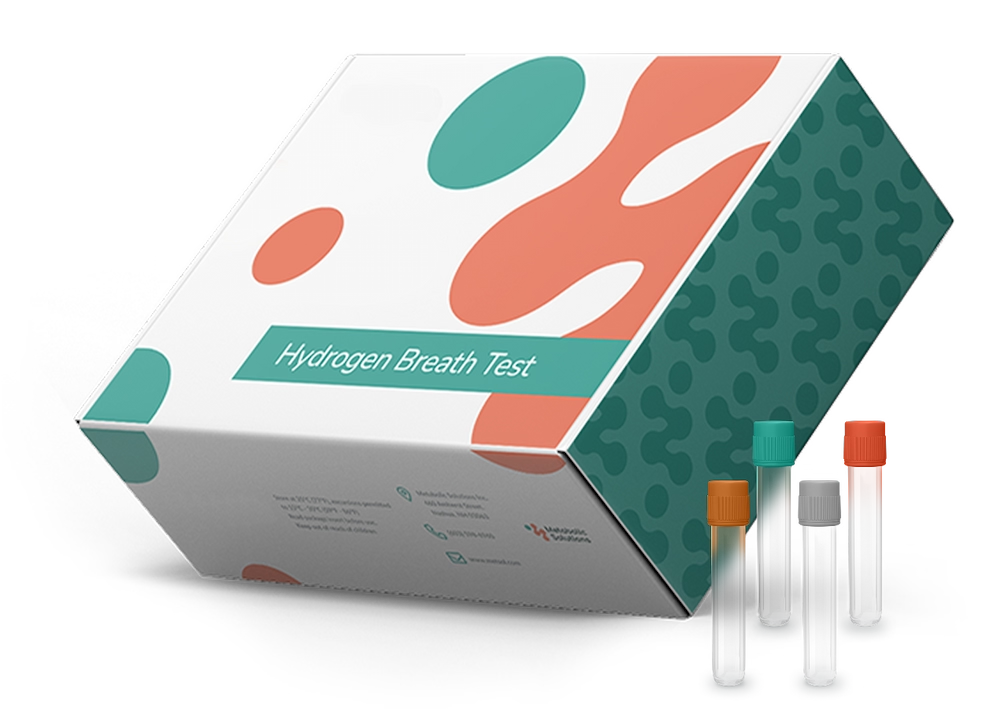
Metabolic Solutions offers a range of validated breath tests to assess digestive health. These non-invasive assays detect bacterial overgrowth, enzyme deficiencies, and malabsorption syndromes by monitoring hydrogen, methane, or 13CO₂ in breath after substrate administration.

Infection & Bacterial Overgrowth Carbohydrate Malabsorption Pancreatic Function
  • Urea Breath Test

    A non-invasive test to detect Helicobacter pylori infection by measuring 13CO₂ in breath after ingestion of 13C-urea.

    The urea breath test (UBT) detects urease activity of Helicobacter pylori (H. pylori) in the stomach. After administration of 13C-urea, bacterial urease converts it to ammonia and 13CO₂, which is measured in expired breath.

    Defined cutoff levels indicate infection and can also confirm eradication after antibiotic treatment. UBT is widely used due to its high sensitivity, specificity, and patient-friendly procedure.

    Small Intestinal Bacterial Overgrowth (SIBO) Breath Test

    Identifies bacterial overgrowth in the small intestine by tracking hydrogen and methane production after lactulose or glucose ingestion.

    Small intestinal bacterial overgrowth (SIBO) occurs when normally sterile small intestines are colonized with bacteria, reducing nutrient absorption and causing inflammation. The SIBO breath test uses lactulose or glucose as a substrate; bacterial fermentation produces hydrogen and methane, which are detected in exhaled breath. Elevated gas levels over time confirm bacterial overgrowth, supporting diagnosis and treatment planning for functional GI disorders.

  • Lactose Breath Test

    Detects lactose intolerance by measuring hydrogen and methane in breath after lactose ingestion. 

    Lactose intolerance results from the body’s inability to break down the milk sugar lactose, leading to colonic gas, diarrhea, and abdominal pain. After administration of lactose, bacterial fermentation produces hydrogen and methane gases, which are measured in exhaled breath.

    This hydrogen breath test provides a reliable, non-invasive way to confirm lactose intolerance and support dietary management.

    Fructose Breath Test

    Assesses fructose malabsorption by tracking hydrogen levels after a standardized oral fructose load.

    Fructose malabsorption occurs when the small intestine cannot absorb fructose efficiently. Unabsorbed fructose passes into the colon, where it is fermented by bacteria, producing hydrogen and causing bloating, abdominal pain, and diarrhea.

    The hydrogen breath test, following a 25 g oral dose of fructose, provides a quantitative readout of malabsorption, aiding diagnosis and treatment planning.

    Sucrose Breath Test

    Evaluates small intestine brush border enzyme activity, detecting damage from infection, trauma, or disease.

    The Sucrose Breath Test (SBT) assesses the health and functional capacity of the intestinal brush border. In conditions such as infection, surgical trauma, chronic disease, or chemotherapy, brush border activity may be impaired, reducing sucrose digestion. 

    After ingestion of 13C-sucrose, reduced 13CO₂ in breath indicates decreased enzyme activity. The SBT is safe, validated, and provides a sensitive measure of small intestinal function in both research and clinical settings.

    See more information about the Sucrose Breath Test here.

  • Breath Tests for Pancreatic Function

    Quantify Pancreatic Lipase Activity with Reproducible Biomarkers

    The most widely researched pancreatic function breath test. Assesses pancreatic lipase activity by measuring 13CO₂ in breath after ingestion of a labeled triglyceride meal.

    The Mixed Triglyceride Breath Test (MTBT) is designed to evaluate pancreatic exocrine function, specifically lipase activity in the duodenum. 


    The test uses a triglyceride labeled with 13C-octanoate at the central glycerol position and long-chain stearate fatty acids at positions 1 and 3. After ingestion with a meal, the triglyceride is hydrolyzed by pancreatic lipases into fatty acids. These fatty acids are absorbed and transported to the liver, where oxidation produces 13CO₂ measurable in expired breath. 


    The rate of 13CO₂ appearance directly reflects pancreatic lipase activity, providing a validated, non-invasive tool for assessing pancreatic function in both clinical and research settings.

    Breath Tests for Oro-Cecal Transit Time

    Generate Regulator-Trusted Gut Motility Endpoints Without Invasive Methods

    Measures oro-cecal transit time using 13C-labeled glycosyl ureides. The rise of 13CO₂ in breath reflects when the substrate reaches the colon.

    The 13C Lactose Ureide Breath Test provides a validated, non-invasive method to assess oro-cecal transit time — the time required for material to move from the mouth to the cecum. 


    Intestinal brush border enzymes cannot split the glycosyl ureide bond between sugar and urea, but colonic bacteria can. Once the substrate reaches the colon, bacterial metabolism releases 13CO₂, which appears in expired breath. The initial rise in 13CO₂ precisely determines oro-cecal transit time, offering a reproducible measure of gut motility that is valuable in both clinical diagnostics and research studies. providing a validated, non-invasive tool for assessing pancreatic function in both clinical and research settings.

Validated Tracer Protocols for Collagen Synthesis

Our validated tracer assays for collagen turnover have been applied in both animal and human studies: 

Breath Tests for Pancreatic Function

Quantify Pancreatic Lipase Activity with Reproducible Biomarkers

The most widely researched pancreatic function breath test. Assesses pancreatic lipase activity by measuring 13CO₂ in breath after ingestion of a labeled triglyceride meal.

Read more

The Mixed Triglyceride Breath Test (MTBT) is designed to evaluate pancreatic exocrine function, specifically lipase activity in the duodenum.

The test uses a triglyceride labeled with 13C-octanoate at the central glycerol position and long-chain stearate fatty acids at positions 1 and 3. After ingestion with a meal, the triglyceride is hydrolyzed by pancreatic lipases into fatty acids. These fatty acids are absorbed and transported to the liver, where oxidation produces 13CO₂ measurable in expired breath. 


The rate of 13CO₂ appearance directly reflects pancreatic lipase activity, providing a validated, non-invasive tool for assessing pancreatic function in both clinical and research settings.

Breath Tests for Oro-Cecal Transit Time

Generate Regulator-Trusted Gut Motility Endpoints Without Invasive Methods

Measures oro-cecal transit time using 13C-labeled glycosyl ureides. The rise of 13CO₂ in breath reflects when the substrate reaches the colon.

Read more

The 13C Lactose Ureide Breath Test provides a validated, non-invasive method to assess oro-cecal transit time — the time required for material to move from the mouth to the cecum.

Intestinal brush border enzymes cannot split the glycosyl ureide bond between sugar and urea, but colonic bacteria can. Once the substrate reaches the colon, bacterial metabolism releases 13CO₂, which appears in expired breath. The initial rise in 13CO₂ precisely determines oro-cecal transit time, offering a reproducible measure of gut motility that is valuable in both clinical diagnostics and research studies.

Trusted by Leaders in Metabolic Research

From discovery to submission, we’ve earned the confidence of industry innovators through precision, speed, and scientific depth.

They’ve been very consistent… the sample analysis and data has always been timely and high quality.

There are academic labs that do it as well, but they’re much harder to engage and contract with.

I think they’re extremely organized and very on top of sample management. All the interactions that I’ve had with them have been great.

Looking for Answers?

Frequently Asked Questions

How do stable isotope breath tests work?

Stable isotope breath tests use safe, non-radioactive tracers (such as 13C-labeled substrates). After ingestion, the body metabolizes the tracer through specific pathways, producing 13CO₂ that is measured in exhaled breath. This provides a direct, dynamic readout of enzyme activity, organ function, or disease processes — without invasive procedures.

Which metabolic pathways can breath tests measure?

Our assays quantify key pathways across liver, gastric, pancreatic, and gastrointestinal health, including:

  • Mitochondrial function (Methionine, Octanoate tests)
  • Cytochrome P450 activity (Methacetin, Caffeine tests)
  • Cytosolic function (Phenylalanine test)
  • Gastric motility (Octanoate muffin meal test)
  • Carbohydrate malabsorption & bacterial overgrowth (Urea, SIBO, Lactose, Fructose, Sucrose tests)
  • Pancreatic lipase activity (Mixed Triglyceride test)
  • Gut transit time (Lactose Ureide test)

Are the tests patient-friendly and repeatable?

Yes. All tracers we use (13C, 2H, 15N) are safe, non-radioactive, and cause no discomfort. Most studies require only simple breath samples — no invasive procedures — making them well tolerated by adults, children, and even fragile patient populations. Because they are safe and minimally burdensome, the tests can be repeated across timepoints to monitor disease progression or therapeutic response.

What’s the typical turnaround time for results?

We’ve designed our workflows for speed without compromise:

  • Protocol design consultations within 48 hours of initial contact.
  • Custom tracer kits shipped rapidly to study sites.
  • Preliminary data reviews available during study execution.
  • Regulatory-ready final reports delivered weeks faster than industry averages.

This ensures you get decision-ready data on a timeline that keeps your program moving.

Are your assays GLP/CLIA compliant?

Yes. All analyses are performed in our GLP-compliant, CLIA-certified laboratories. We operate under 21 CFR Part 11 standards with full audit trails, validated SOPs, and inspection-ready facilities. This ensures every data point meets the highest quality standards and is fully defensible in regulatory submissions.

Contact Us

Ready to Design Your Breath Test Study?

Work directly with our assay experts to tailor validated breath test protocols to your research goals.

contact-background-image-femal-lab-flasks-flipped

Metabolic Solutions, LLC.
460 Amherst St., Nashua,
NH 03063, USA

Hours of Operation
Monday – Friday
7:30 am – 6:00 pm EST